Showing posts with label Joan Welch. Show all posts

Monday, 26 June 2017

ATKINSON FAMILY BLOG LAUNCH


This post is to launch an additional family history blog site The Atkinson Family Sheffield to Canada

In 2012,  I took a course in setting up a blog site from the Ontario Genealogy Society. The teacher insisted that if we created a blog site to share our family history, cousins from far and wide would find us online and likely contact us.

I was skeptical but I was interested in learning more about the internet and blogging in general so I took the course. Happily she was right.

I started blogging here about my mother’s family shortly thereafter and I am so pleased that a couple of young distant cousins contacted me. That led me to getting to know their parents and grandparents who are my first or second cousins. It even prompted two vacation trips to meet cousins in British Columbia and England.

I have been writing about my mother’s mother Elizabeth Blaney and her family in a more or less chronological manner and I have now reached the point in the timeline where my mother Joan Welch met my father William Atkinson. It seems a good idea to begin a separate blog site to tell the stories of my father’s family.

I learned how to link the two blogs together so I can refer readers back and forth as needed to continue the stories of both families.

As always any additional information or feedback regarding errors and omissions are always welcome.

Friday, 19 May 2017

GROWING UP IN TORONTO

Back in Toronto, Harry & Bess continued to work regularly for most of the 1930s and their children grew into adults. The Toronto City Directories show that they had six addresses during that time, perhaps due to the need for space, the ups and owns of employment and finances or proximity to work or school.

Life was interesting in Toronto and there was plenty to do. There was dancing to the Big Bands at the Palais Royale Dance Hall, the Canadian National Exhibition ran for two weeks at the end every summer and horse-racing was available at Woodbine track. Maple Leaf Gardens opened in 1932 and became the home of the Toronto Maple Leaf Hockey Team and in 1938 Superman was created by Toronto high school student John Shuster.

For sports fans there were professional hockey and football teams. There were also the Athletic Grounds provided by the city that included bowling greens, football and baseball fields along with skating rinks, hockey rinks and toboggan hills.


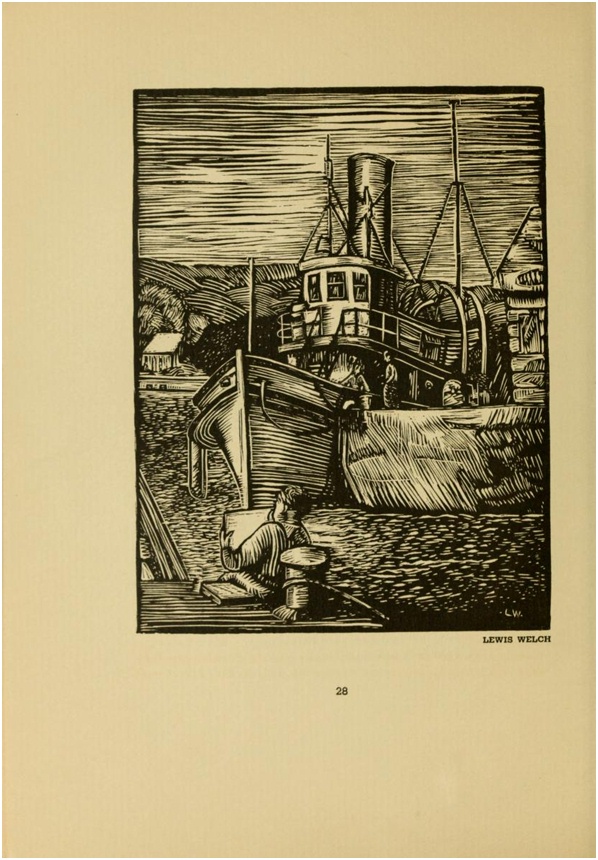
Lewis Welch


In his teens, Lewis’s artistic talent was recognized and the family scrimped so he could attend the Ontario Art College. Joan felt that his need for art supplies became more important than other things the family might want to buy but she was forever proud of him and his talent.


During 1936 and 1937 some of his work was published in The Tangent, an annual OAC student publication of stories, poetry and art and in the 1937 edition he is shown as the production assistant.


The Tangent 1936
The Tangent 1937


By 1938 Lewis was contributing to the family home, an apartment over a drugstore, on Queen St. E at Jarvis St. He was working as an artist for Stanley Manufacturing, a metal printer and fabricator established in 1917. He would go on to be a very successful commercial artist.

I am proud to own a watercolour landscape painting he gave me as a wedding present in 1961.


Bess


Church and music were important to the family. There were Church services twice on Sundays with choir practice, bible study and youth group events during the week. At St. Stephen's United Church on Queen Street, Bess was a soloist while Joan and Lewis sang in the choir and they all participated in church social activities.


Lewis is seen here in a Rhodes Avenue United Church Choral Society production in 1938. He played the role of Tona in the musical comedy El Bandito.


There was certainly no laundry or other housework done on Sunday. Shops were closed and in Toronto the Good, there was no fun to be had except good clean fun at the beach with free streetcar rides for children from poor neighbourhoods.

The Eaton's Department Store covered their windows, park swings were chained up and there was no toboggan riding on Sunday. Every activity was subject to the 1906 Lord’s Day Act and Sunday as a day of worship or rest was enforced. A Toronto referendum in 1950 allowed professional team sports to be played on Sunday. Theatre performances, movie screenings, and horse racing were not permitted until the 1960s.


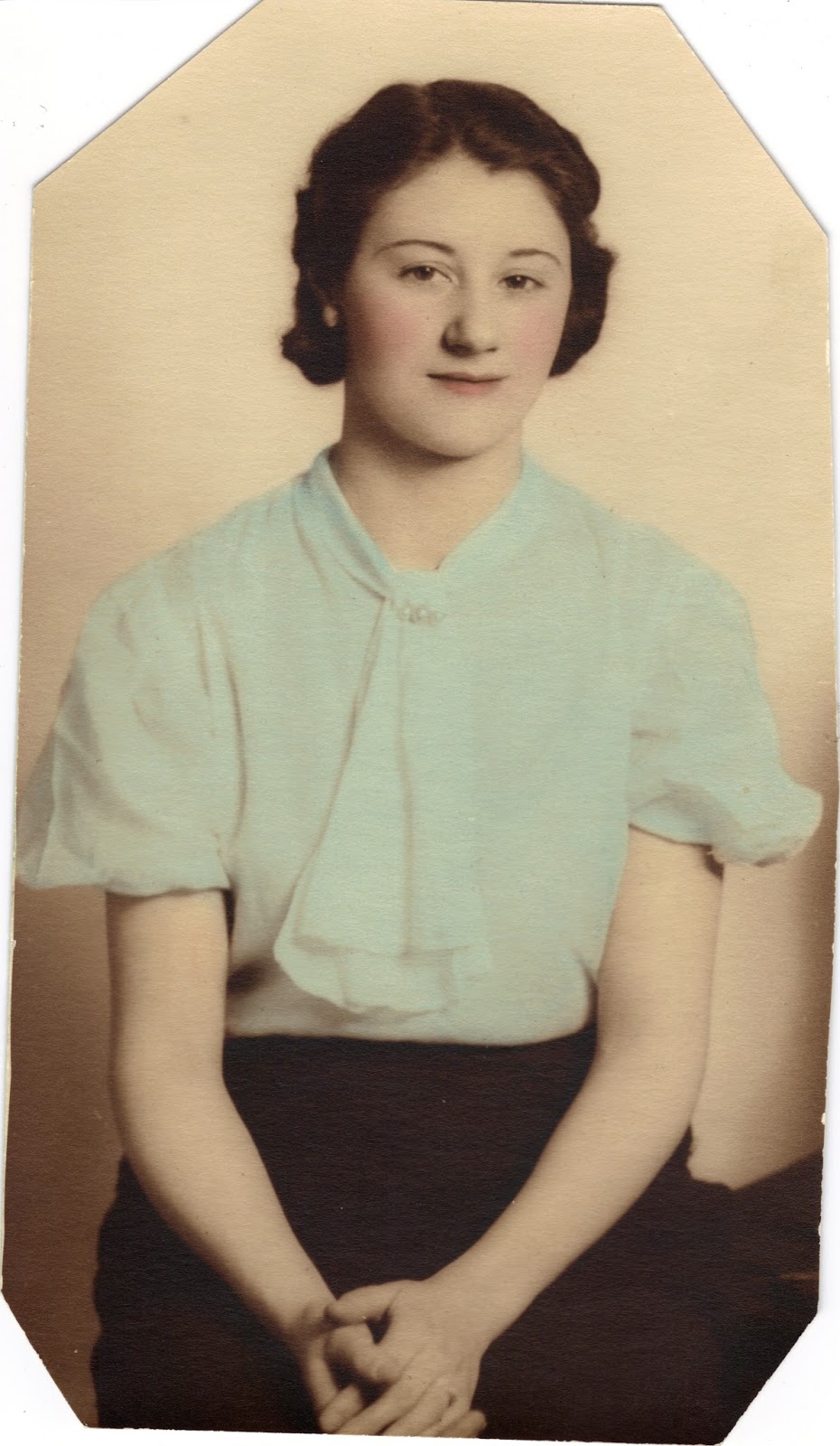
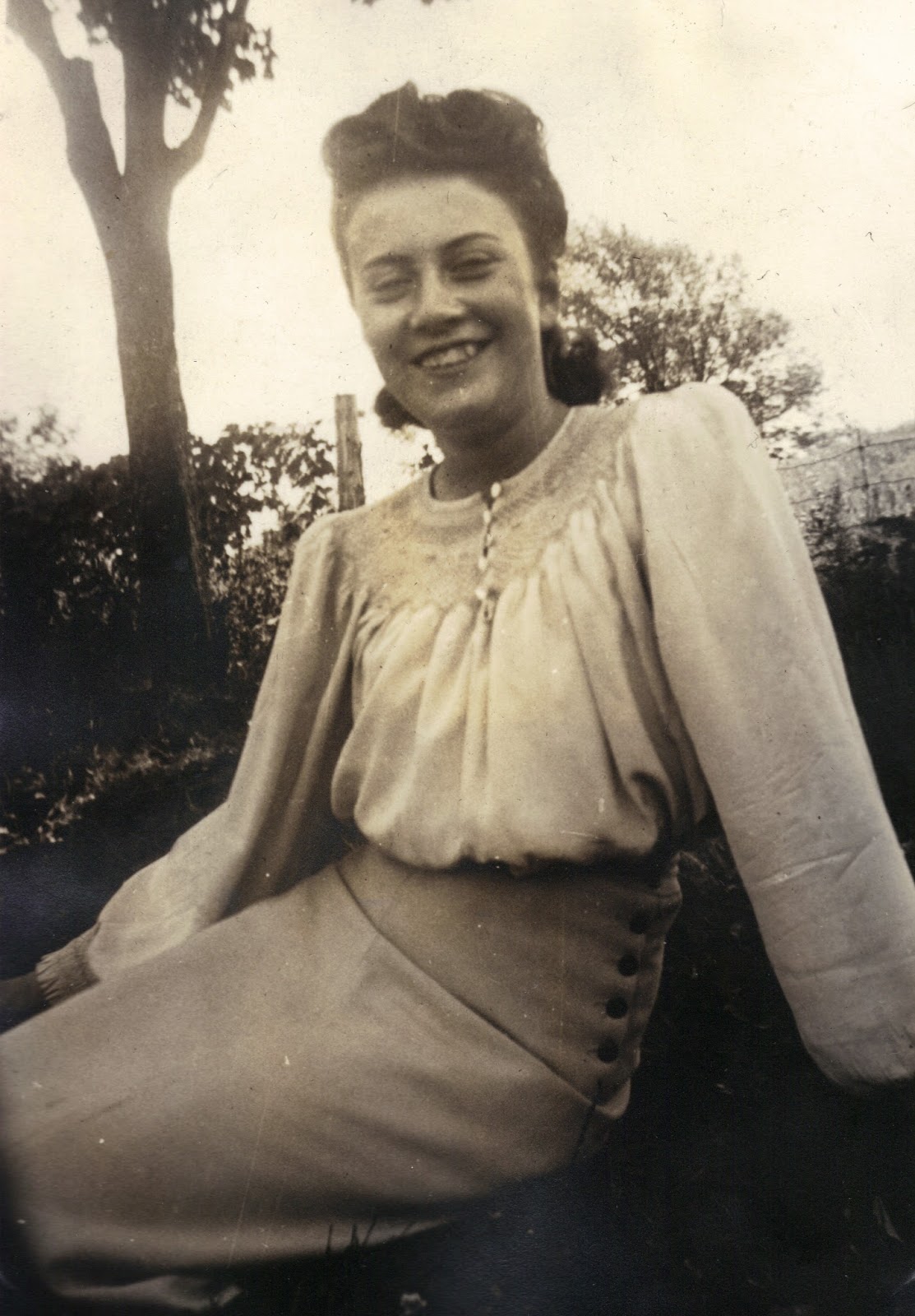
Joan Welch
In the summer of 1932, at age 15, Joan left school to work. She got her first job because her mother knew the owners of Chapman Brothers Jewellery store at 261 Yonge Street near their home.

The Chapman family had a cottage at Lake Simcoe and they hired Joan to be a mother’s helper for the summer. It was about two hours north of Toronto in those days before today’s major highways. She lived there all summer doing any chores that needed to be done from cooking breakfast for the family and their many guests to picking up the mail.

One day she was travelling alone by canoe to pick up the mail at a small store down the lake. While in the store she became anxious because the sky was becoming dark and the winds were picking up. Lake Simcoe is still known for quickly arriving storms during which strong winds create very high waves.

On the trip back to the cottage Joan could not manage the canoe. She was being tossed about by the waves and she was frightened, thinking she was going to capsize and be lost to the angry lake. Luckily the skipper of a motor boat heard her cries and took her aboard his craft, taking her back to the cottage while towing her canoe along behind. It was an experience she never forgot.

She told the story in her late eighties after being caught out in a storm on a fishing boat with her son-in-law. The motor stalled in the pouring rain and they had to be towed to shore by a neighbour.

At the end of that summer job Joan began working at light manufacturing jobs. She worked on the assembly line of the Willard Chocolate Factory and for a company making advertising buttons. She often told of the noise of the button stamping machines and how people working every day in a candy factory soon lose their appetite for candy.
Eileen Welch

While Joan was working and living at home she lamented the fact that her younger sister Eileen who was a social butterfly who loved going out dancing, often sneaking out in Joan’s clothes; putting them back soiled.

Joan also told a story of Eileen hiding dirty dishes in the oven to avoid taking her turn washing them. Eileen was eight years younger and I am sure she had a few stories of her own to tell about her older siblings.

                                             
Harry Welch


Their father Harry also loved to dance and he won a few prizes for ballroom dancing in Toronto including a set of silver apostle spoons. Bess was a singer not a dancer but Harry had no difficulty finding partners in their social circle.


In 1934 Toronto celebrated its 100th birthday with centennial activities and parades. On the eve of the centennial, services were held on the grounds of the CNE with 11,000 people attending. Bess was part of a 2500 person choir from various churches and they were all given a certificate to mark the occasion. That very large crowd singing God Save the King along with the 2500 voice choir must have been quite the sight and sound.


It was about 1934 when Joan met the man she would marry.


Saturday, 11 February 2017

BOOM to BUST - They Called Them the Dirty Thirties


The silver age of the twenties was almost over when Harry, Bess and their three children moved from Brantford to the big city. Toronto had been booming for almost a decade, even the tourists were coming.

Known as a city of churches it was also a financial, manufacturing and retailing centre. There was a building boom with fourteen skyscrapers built between 1922 and 1928 and in June 1929 the sixteen million dollar Royal York Hotel was opened.

Traffic on Bay Street

Industry was growing, inflation and wages were up, the good times had returned. There were jobs in the banks and insurance companies. Women were now accepted as part of the workforce and 25% of them had work. Many people had a job and a car, so road congestion became a problem in the bustling city and Driver Licenses were necessary.

41 Delaney Cr. Parkdale

The 1920s were also a time of “buy now, pay later” for cars, appliances and homes which caused over expansion and over production subsequently resulting in layoffs. Construction was slowing down too.

When he was not ailing, Harry was employed as a brass worker, Lewis age 13 and Joan age 12 attended local public schools. After school Joan prepared dinner and helped care for her four year old sister Eileen while Bess worked a split shift cleaning early morning and late afternoon at one of the large downtown banks. They were renting a small house in the working class Parkdale area of Toronto.

The bubble burst when the Wall Street Stock Market crashed in October 1929. It was the beginning of the dirty thirties. It was the Depression and it was hard times for most.

The Prairies suffered from extreme cold and blizzards, followed by drought and grasshopper plagues resulting in dust storms and crop failure. 100,000 people left to look for work in the cities.Unskilled single men suffered the most hardship during this time.

In Toronto Since 1918: An Illustrated History, James Lemon provides some gruelling statistics. In 1931, 17% of Toronto’s population was out of work and two years later, 30% were unemployed. There was no unemployment insurance, no family allowance and no medicare.

Those working, saw wages drop by 60%, and no overtime.  The federal government set up work camps for single men doing construction work in the bush. Municipal jobs building sewers, water mains and roads by hand, known as “moving dirt”, were created.  Many men criss-crossed the country by hopping on trains and sleeping outdoors while searching for work. Hobos lived in the Don Valley in Toronto.

Scott Mission - soup kitchen
More than 100,000 people were "on the dole". Public relief agencies provided some vouchers for food and rent (no cash), and soup kitchens provided help. Evictions were common and people moved frequently as there was only help for the first month's rent. To qualify, applicants must have no relatives to help them, be supporting a family, use no liquor, and have no telephone or car.

People coped as best they could. They helped each other, remade clothing, repaired what they had, fed vagrants, took in boarders or shared houses with family members. Large houses were broken up into rental units as 60% were tenants. Young people remained at home longer and the number of marriages fell along with the birthrate. Some lived well as goods were cheap; the value of some products falling by up to 50%.

At one point Harry suffered a heart attack and could not work, causing Bess to sell her engagement ring to raise funds.

However for a number of years Harry was well and he was a skilled and experienced brass worker. He made fittings for Standard Bronze Company, a large manufacturer of lighting fixtures and Bess was working as a cleaner. Some of Harry's brass and copper works remain in the family.


The family were thrifty, for example Harry mended their shoes - they were making ends meet.

Generations who lived through those times carried the lessons throughout their life. Bess and Joan practiced “waste not want not” and "try to keep a little money for a rainy day”. They took care of their belongings, repairing them rather than replacing them and they used electricity and heat judiciously for the rest of their lives.

****************

Shortly after Bess and Harry moved to Toronto, Bess’s family joined them, coming from Birmingham England. Bess's mother Martha Jane (Elcocks) Blaney was age 52, her father Harry Blaney age 53, her sister Louise age 14 and brother Alfred (Alfie) was age 9. They boarded the S.S. Athena on November 2, 1929 and arrived in Quebec nine days later.

Harry Blaney
Harry Blaney was a leather worker and the passenger list notes that the family’s destination was their daughter’s home in Toronto.
Martha Jane Blaney

It also shows that their fares were paid by the British Salvation Army. The charity made passage available to many poor residents of England to give them a fresh start in the colonies.

Taking the train from Quebec to Toronto, they were met at Union Station by Bess and Harry.

Bess’ sister Louise was just a year older than her son Lewis. They were all living together so Louise, Lewis and Joan quickly became good friends and they enjoyed their time together.

Lewis, Louise, Joan & Eileen
Lewis Joan & Louise
It was the Golden Age of Hollywood and you could forget your troubles with a 25 cent ticket to the movies. Radio was entertaining and widely available. There were sporting events, roller skating and swimming.

The family loved the beach, often taking the ferry to Hanlon’s Point on Toronto Island or the streetcar to the eastern beaches, with family and friends.  

Life was not so easy for the parents. Bess and her mother had never been close and everyone living in the same house was likely challenging for all of them. 

Unfortunately within a year of their arrival the Blaneys were forced to return to England.

Family lore has it that Jane, while working in a ladies wear shop, had taken something that did not belong to her. Regardless, the passenger list of the Andania shows Harry, Jane, Louise & Alfie listed under the category Deported. Their destination was shown as 12 Heathfield Road, Birmingham, the home of their son Ted Blaney and they arrived in Liverpool, England on October 19, 1930.

Bess was appalled and embarrassed to say the least and it was not spoken about even within the family. However Joan did tell me the story late in her life. Other than the passenger list, I have not yet been able to find an official record of the event.

As written in Whence They Came, Deportation from Canada 1900-1935 by Barbara Roberts, in Canada during the depression, any “new” immigrants (less than 5 years in Canada) not working or being supported by someone else, as well as troublemakers, were deported, often without trials. Between 1930 and 1935, thirty thousand people were deported from Canada. An article on the Libraries and Archives Canada website mentions that never before or since have deportations reached the same magnitude as in those years. Some Canadians, desperate themselves, blamed foreigners for taking away their jobs and using relief agency funds.

Harry and Jane returned to Birmingham penniless and moved in with their son Ted and his family where they stayed for a number of years.   Recently a daughter of Ted’s told me that things did not go very well there either due to many conflicts over her Grandmother Jane’s behaviour.